
Google continuously updates its search algorithm to provide the best results for its visitors. If you want to get your blog or website to the top of search results, it is essential to implement SEO ranking factors.
Many bloggers and entrepreneurs spend significant amounts of money to improve their site’s ranking, yet they often overlook the fact that this is an ongoing process requiring continuous effort and attention to updates. This is because Google frequently updates its SERP algorithm, constantly introducing new factors that one needs to be aware of.
What are SEO ranking factors?
Ranking factors are criteria applied by Google (and other search engines) when evaluating pages to determine the best order of relevant results for a search query. Understanding ranking factors is essential for effective SEO; all marketers, content creators, and SEO strategists should be familiar with them.
According to SEO experts, Google uses 200 SEO ranking factors to rank a page. However, here we are going to discuss the most important signals among them. A study indicates that there are 10 such factors that are crucial for Google ranking.
SEO Ranking Factors
Here, I have compiled a list of Google ranking factors that you can read to easily boost your website traffic and rankings.




1. Content Quality
This is the most important aspect of Google ranking. Google has significantly updated its algorithms in recent times and now places greater emphasis on quality content. Google aims to provide high-quality content to its users; therefore, it is essential to focus on quality rather than just content length—creating content that genuinely helps the user.
Research has shown that websites featuring high-quality, extensive content consistently achieve higher search rankings compared to others. The longer the article, the greater the likelihood of it ranking well. Additionally, this encourages visitors to spend more time reading the content on your blog, which benefits your website.
2. Keyword Research
Keyword research is the most important factor for Google ranking; without it, it is difficult to rank any website or blog. Conducting keyword research before writing a blog is essential, as it allows you to effectively optimize your article for search engines.
It is very difficult to rank a blog or website on search engines without keyword research. Google aims to provide better results to its visitors, which is why it continuously updates its algorithms. In today’s landscape, keyword research is essential for your blog to achieve a top ranking.
3. Meta Descriptions
A meta description provides search engines with information about the post. It is also essential to include the target or focus keyword in the meta description so that users clearly understand what the post is about and why they should read it. It is important to keep the meta description within 160 characters.
4. External linking
When you link your website to another domain, it is called an external link. If you want your blog to rank in search engines, you need to build your website’s trust. Creating external links helps achieve this; ideally, the linked websites should have good Domain Authority (DA) and Page Authority (PA).
5. Internal Linking
Internal linking is essential in blog posts, as it allows authority to be transferred from one page to another. It also encourages visitors to spend more time on your website, thereby reducing the bounce rate. When creating internal links, ensure you add only relevant ones.
This makes it easier for search engines to understand and index the content. Topic clusters are also beneficial from a user experience perspective. They make your content easy to navigate, and readers realize they do not need to visit multiple sites to find what they are looking for.
6. Backlink Building
This is Google’s oldest and most important ranking factor. To bring any website or blog to the top of search engine rankings, its Domain Authority and Page Authority are crucial—and these depend on backlinks.
If you build quality backlinks for your site, both DA and PA begin to increase, making it easier for your website to rank. Therefore, if you are a blogger, you should definitely build backlinks.
When building backlinks, make sure to check that the site does not have a high spam score; if it does, do not acquire a backlink from it. Sites with high spam scores can harm your site’s ranking.
7. Website Speed
The secret to a blog’s success lies in its loading speed. This provides a positive experience for your site visitors, encouraging them to stay on your website longer. Consequently, your site’s bounce rate will also decrease.
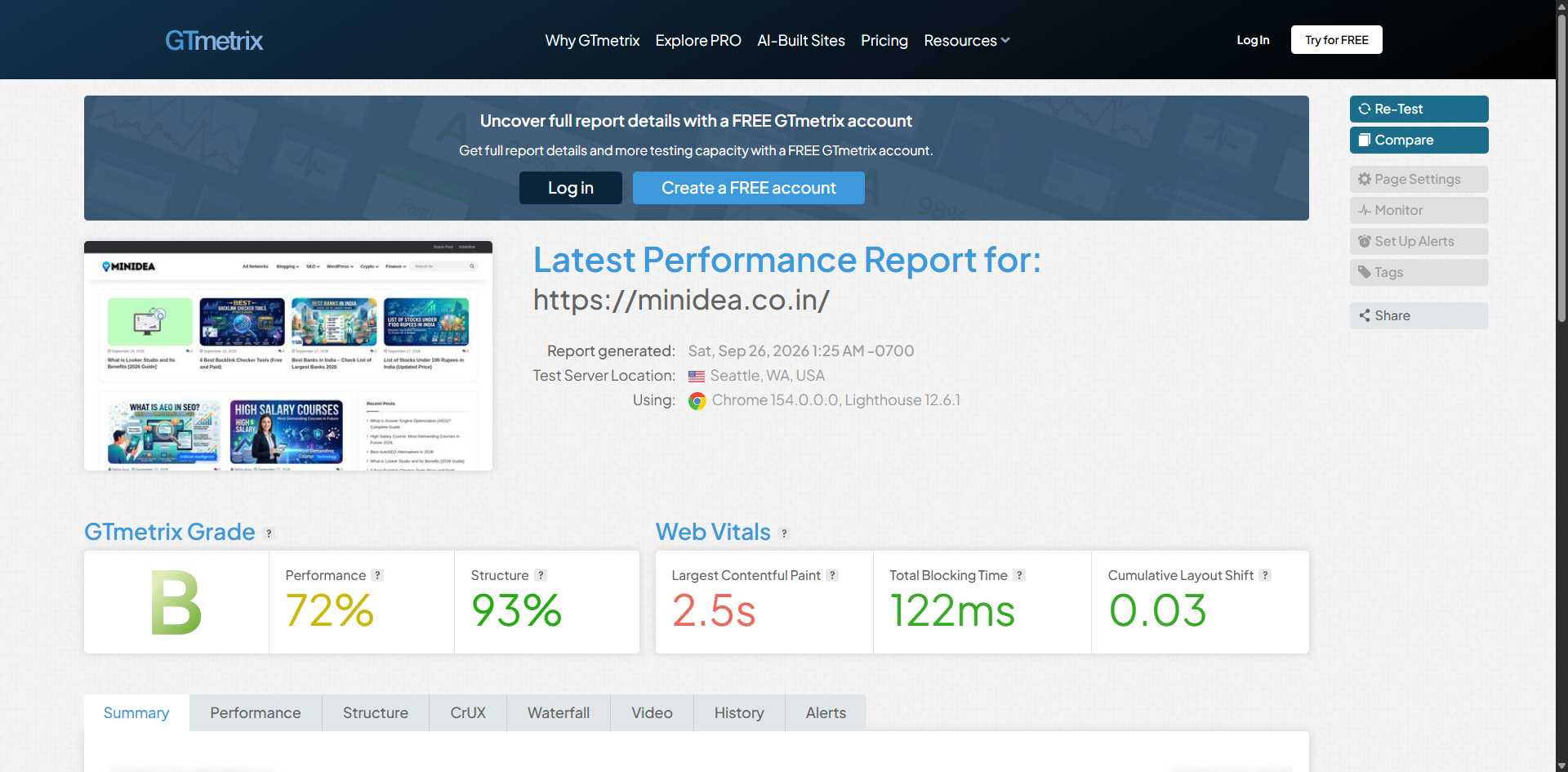
Some time ago, Google announced in an algorithm update that websites with good loading speeds would load quickly in search engines and see an improvement in their rankings.
Domain Authority is crucial for bloggers. A site with high DA sees its content rank faster and stay at the top for a long time; it is one of the most sought-after metrics among Google ranking factors. To increase DA, keep building quality backlinks.
Along with DA, domain age is also a very important factor. The older the domain, the better its ranking tends to be. That is why professional bloggers often recommend purchasing expired domains.
9. URL Structure
To rank any post in search engines, it is important to pay attention to the URL structure. URLs are also known as permalinks, and you should certainly keep these points in mind when optimizing them.
- Always keep the post URL short.
- Make sure to include main keywords in the URL.
- Use lowercase letters in the URL.
- Always aim to create user-friendly URLs.
- Avoid using special characters and stop words in the URL.
10. Schema Markup (Structured Data)
Schema markup, or structured data, is a type of code that helps search algorithms understand the content on a webpage. This can boost your visibility in traditional search results, rich snippets, knowledge panels.
Frequently Asked Questions
What is Google’s biggest ranking factor?
If you want to rank your article, it is crucial to focus primarily on quality content.
What are SEO ranking factors?
The points addressed to rank a website in search engines are known as Google ranking factors. Google has identified approximately 200 factors for ranking.
How long does it take to rank a website?
It takes approximately three to six months for any website to maintain its ranking in search engines over the long term.
How often do SEO ranking factors change?
Google makes 5,000+ algorithm changes per year.
What is the fastest way to improve local SEO rankings?
Optimize your Google Business Profile and fix entity consistency across all platforms.
Conclusion
In this article, we discussed the top SEO ranking factors that bloggers and SEO professionals must keep in mind. We hope you found this information helpful.
Implementing SEO is crucial for ranking a website’s pages on search engines; Google considers over 200 factors for ranking. However, very few people are aware of them. If you want your site to reach the number one spot on search engines, be sure to follow these guidelines.