

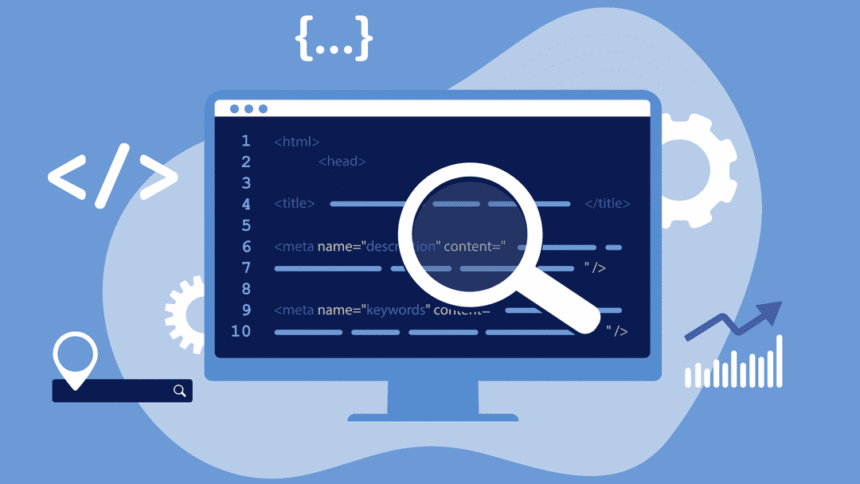
A meta description is a short webpage description for search engines to display a brief summary in search results. It is crucial for the on-page SEO of any web page. These meta descriptions appear on search engine results pages (SERPs).
Its primary objective is to get Google visitors to click on your link. In other words, meta descriptions are designed to generate click-throughs from search engines. A meta description is a 160-character snippet—an HTML tag—that summarizes the page’s content. Making mistakes while writing them could cause you to lose a significant number of visitors.
What Is a Meta Description?
Whenever a user searches for a keyword or query on Google or any other search engine, the search engine displays certain websites related to that keyword. These listings include a title and a brief description, which the user reads before clicking on the link.
If a website’s title and description do not contain the information being searched for, users will not click on that website. It is essential for a blog post’s title and description to be attractive so that users are persuaded to visit the site.
The meta description usually appears below the blue clickable link on the search engine results page (SERP).
Example of meta description in code:
<meta name=”description” content=”When writing a meta description, keep it between 140 and 160 characters so Google can display your entire message. Don’t forget to include your keyword!”>
Are Meta Descriptions Important?
A meta description is crucial for your SEO success. It encourages users to click. Even if you have secured one of the top spots on Google, it won’t benefit you if users aren’t interested in clicking on your page.
Meta descriptions aren’t very important because they don’t directly affect your rankings in search results. Therefore, some SEOs argue that meta descriptions are unnecessary and that you shouldn’t waste time on them. However, this could lead to negative consequences down the line.
However: Meta descriptions can be important when they appear in search results.
Tips for Writing Meta Descriptions
Here is how to create better meta descriptions for your website or blog that will entice visitors to click on and visit your pages—thereby improving your Google SERP ranking.
1. Consider Meta Description Length
According to the Moz expert team, the guideline for meta description length is 150–160 characters.
Google frequently changes meta description lengths; while you will mostly see meta descriptions of up to 155 characters, in some cases, they can extend to 300 characters. At the very least, try to include essential information within the first 155 characters of your meta description.
2. Write unique decription for each page
Do not write the same meta description for all pages of your website and copy-paste it onto every page. Write a description containing a specific focus keyword for each page of your website.
3. Include Your Primary Keyword
If you look at the meta descriptions in Google search results, you will notice that wherever the words included in your search appear, they are bolded.
4. Matching of materials
Misleading descriptions can increase a website’s bounce rate. You simply need to add a description that matches the content of the webpage.
5. Include a call-to-action or offer
Use a few characters in your website’s meta description to encourage people to click by using action words like “Learn how,” “Read more,” or “Discover.”
Common Mistakes to Avoid
You must avoid the following common mistakes:
- Writing the same SEO meta titles and descriptions for different pages.
- Ignoring the placement of keywords.
- Making meta titles too long or too short.
- Writing descriptions that are vague or irrelevant.
- Forgetting to add personal appeal or value.
SEO Meta tags may look small, but they play a big role in boosting your website’s visibility. For every page, use unique descriptions. Need to match the search intent of the users.
FAQs
What is the meta description?
The meta description of a web page is shown in the SERP of search engines and contains an overview of a page’s content.
Are meta descriptions important?
Yes. Meta descriptions impact your page’s click-through rate, which can indirectly improve search rankings.
Which tools help with writing meta tags?
You can write meta tags using tools like Yoast SEO and Rank Math.
Conclusion
In this article, we explored what a meta description is and how to write one. Always remember that for any webpage to rank in search engines, the website must be visible. Furthermore, one should always prioritize the user while working.