A Corporate Identification Number (CIN) is a unique identification number that is assigned to all companies registered in India. This unique number helps regulators, investors, financial institutions, and other stakeholders identify.
The Corporate Identification Number (CIN) is an important aspect of a companies. It is essential for all the companies to mention the CIN number on various documents, such as its invoice, notices, cash memo, letterheads, etc.
What is a CIN Number?
A Corporate Identification Number or CIN number is a 21-character alpha-numeric code, जो कि भारत में पंजीकृत कंपनियों को प्रदान किया जाता है। यह कंपनी के लिए unique identifier कि तरह काम करता है। It serves as a company’s official identity for regulatory and compliance purposes.
A CIN is provided to all companies registered in India, including:
- Private Limited Companies (PLCs)
- One Person Companies (OPCs)
- Companies owned by the Government of India
- State Government Companies
- Not-for-Profit Section 8 Companies
- Nidhi Companies, etc.
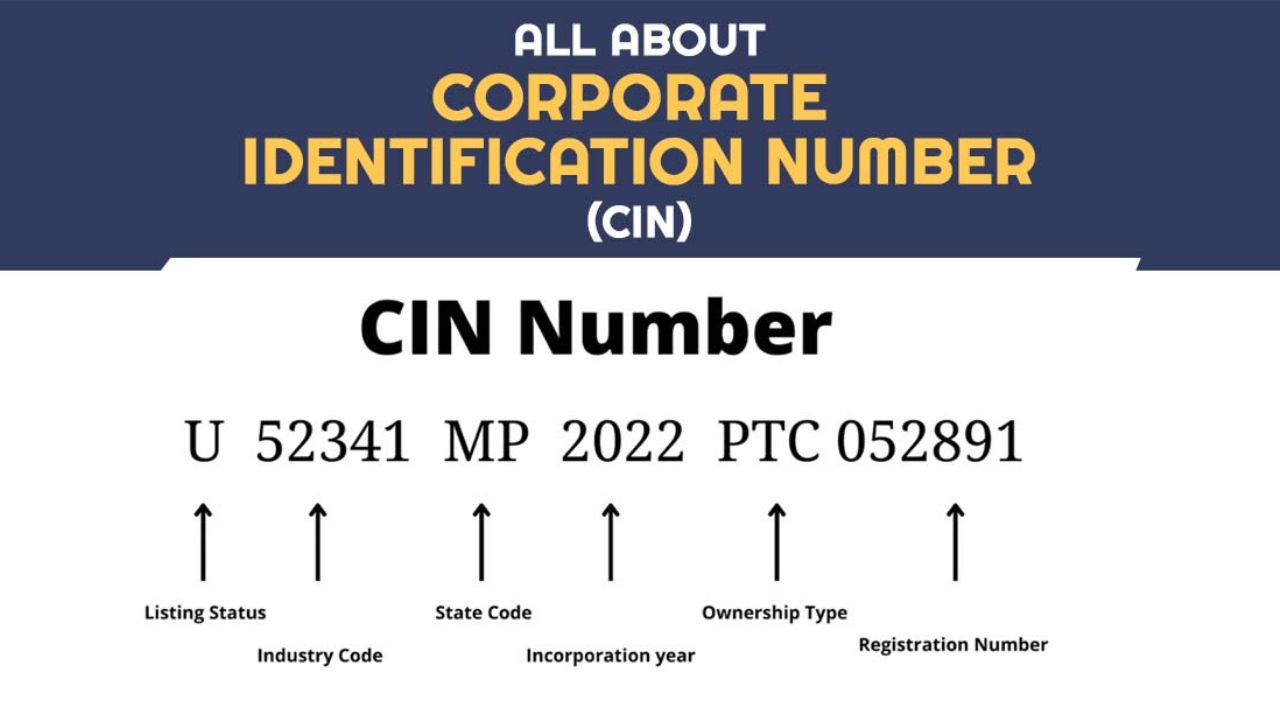
Understanding the Structure of a CIN Number
| Section | Example | Meaning |
|---|---|---|
| 1st Character | L | Listed or Unlisted Status |
| Next 5 Digits | 01245 | Industry Classification |
| Next 2 Letters | MH | State of Registration |
| Next 4 Digits | 2010 | Year of Incorporation |
| Next 3 Letters | PTC | Company Category |
| Last 6 Digits | 089453 | ROC Registration Number |
What Do the Common CIN Abbreviations Mean?
| Abbreviation | Meaning |
|---|---|
| PTC | Private Limited Company |
| PLC | Public Limited Company |
| OPC | One Person Company |
| GOI | Government of India Company |
| SGC | State Government Company |
| NPL | Section 8 (Not-for-Profit) Company |
| FTC | Subsidiary of Foreign Company |
Where is the Corporate Incorporation Number Used?
Every company that is established in India needs to quote its Corporate Identification Number on various documents which include:




- On invoices, bills and receipts
- On notice
- On memos
- On letterheads
- Annual reports and audits
- Every e-form submission on the MCA portal
- Company’s official publications
- Any other company publications
What Are the Differences Between CIN and GSTIN?
| Particulars | CIN | GSTIN |
| Full Form | Corporate Identification Number | Goods and Services Tax Identification Number |
| Governing Law | Companies Act, 2013 | Central Goods and Services Tax (CGST) Act, 2017 |
| Issuing Authority | Ministry of Corporate Affairs (MCA) | Central Board of Indirect Taxes and Customs (CBIC) |
| Issued To | Companies registered under the MCA | Businesses registered under GST |
| Purpose | Company identification for legal compliance | Tax identification for GST transactions |
| Structure | 21-digit alphanumeric code | 15-digit alphanumeric code |
| Information | Listing status, industry or activity, state, year of incorporation, ownership, registration number | State code, PAN, entity number, default value, checksum |
| Applicability | All companies | Businesses that require GST registration under GST laws, or voluntarily registered businesses |
| Usage | ROC filings, compliance, legal identity | Invoices, tax filings, input tax credit |
| Format Example | L79110DL2014PTC856743 | 29AXCOE8739F1Z5 |
The CIN is critical for identifying and tracking a company’s activities. It is issued by the Registrar of Companies. It is essential for verifying company information during legal and financial transactions. If you are running a company, having a CIN is crucial.