Crypto Tax In India 2026: Everything You Need to Know
Cryptocurrency taxation in India has evolved significantly over the past few years. In India, annual profits from crypto trading are taxed at 30%, and a 1% TDS is deducted on each crypto transaction. TDS is deducted from the final sale amount, not just the profits. There is no distinction between short-term and long-term gains.
Cryptocurrency investment has grown rapidly over the past few years. Consequently, the Indian government has implemented strict regulations for cryptocurrencies and virtual digital assets (VDAs). According to the tax department, cryptocurrencies allow for easy, anonymous tax savings. This not only increases the risk of tax evasion but also makes it difficult to curb money laundering and illegal funding.
Cryptocurrencies are digital currencies designed to buy goods and services, similar to other currencies. There are currently over 1,500 virtual currencies available, including Bitcoin, Ethereum, Litecoin, Dogecoin, Ripple, Matic, etc. All of these digital currencies can be invested in.
Crypto Tax in India and the 30 Percent Tax Rule
Cryptocurrency gains are taxed at a flat rate of 30%. Cryptocurrency tax rules are very strict, and you may have to pay income tax not only on earnings but also on losses, even if your entire portfolio is in the red.
Under India’s strict crypto tax rules, investors have to pay a flat 30% tax on every rupee of profit, even if there are overall losses.




The following transaction using crypto-currency fall under the ambit of taxation:
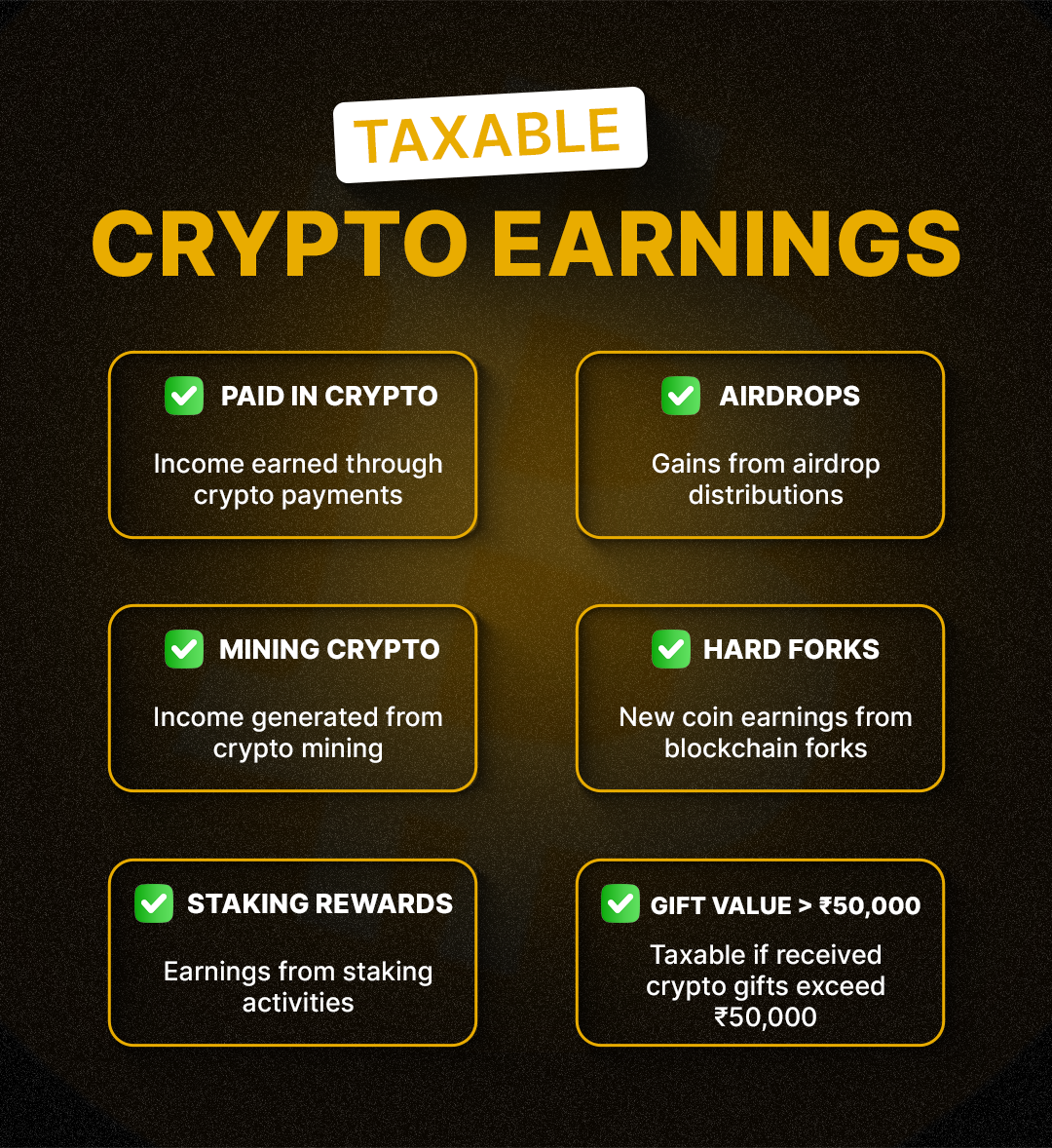
- Spending cryptocurrencies to purchase goods or services.
- Exchanging cryptocurrencies for other cryptocurrencies
- Trading cryptocurrency using fiat currency such as ₹(INR)
- Receive cryptocurrency as payment for a service
- Receiving cryptocurrency as a gift
- Mining cryptocurrency
- Drawing a salary in crypto
- Staking crypto and earning stake benefits
- Receiving Airdrops
Crypto Transactions and the Applicable Rate
| Transaction | Tax Treatment |
| Buying crypto | 1% Tax Deducted at Source (TDS) by the exchange |
| Selling crypto | 30% tax on any capital gains |
| Trading crypto for crypto | 30% tax on any gains |
| Holding crypto | Generally tax-free, but subject to capital gains tax |
| Airdrops of crypto | Considered as income at your applicable tax rate; 30% tax |
| Hard forks | Income Tax at your applicable tax rate upon receipt; 30% tax |
| Gifts of crypto | The recipient will be subject to tax at normal rates |
| Donating crypto | Only cash donations are tax deductible |
| Mining rewards | Income Tax at your individual tax rate; 30% tax if later sold |
| Staking rewards | Income Tax at your individual tax rate; 30% tax if later sold |
Things Investors Should Note
TDS and GST burden too
If your annual crypto transactions exceed ₹50,000, you also have to pay a 1% TDS on each trade, as defined in Section 194S. This tax is deducted even if you aren’t making a profit, which reduces liquidity and cash flow for active traders.
Frequently Asked Questions
Is crypto income taxable in India?
Yes, income from the cryptocurrencies is taxable in India.
How much tax is levied on cryptocurrency in India?
Gains from crypto are taxed at 30% and 1% TDS is deducted on transfer of crypto assets.