Government Banks in India: Public Sector Banks in India 2026
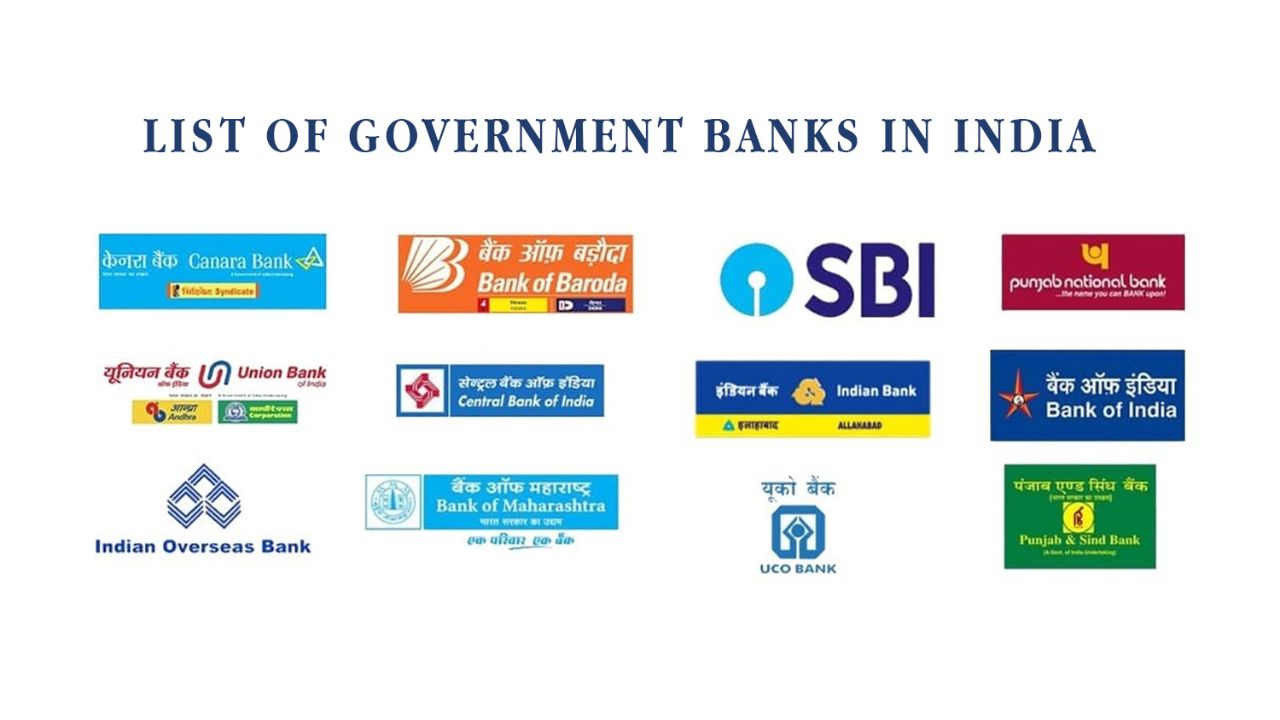
Government banks in India form the backbone of the country’s public banking system. Government or public-sector banks are banks where the government holds a majority stake. You can apply for various loans, credit cards, and open fixed deposits with such banks.
The public sector banks take accountability from the government of India. In this article, you will learn what government banks are. Also, the difference between government and private banks, and more.
Key features of government banks in India
- Majority government ownership and strong regulatory oversight.
- Wide branch and ATM network in both urban and rural areas.
- Focus on priority sector lending like agriculture, MSMEs and affordable housing.
- Competitive interest rates on savings accounts, FDs and many loan categories.
- Access to government schemes, DBT, pensions and social security payments.
List of Public Sector Banks in India 2026
Currently, there are 12 nationalised banks in the country. Here is the latest government bank list:
- State Bank of India
- Bank of Baroda
- Punjab National Bank
- Bank of India
- Union Bank of India
- Canara Bank
- Bank of Maharashtra
- Central Bank of India
- Indian Overseas bank
- Indian Bank
- UCO Bank
- Punjab and Sind Bank
How Many Government Banks Are There in India 2026?
After several mergers since independence, India now has 12 public sector banks. These nationalised banks in India include SBI, PNB and Bank of Baroda as well as mid‑sized lenders such as UCO Bank and Bank of Maharashtra.
| S.No | Government bank (PSB) | Headquarters | Type / Status |
| 1 | State Bank of India (SBI) | Mumbai | Largest public sector bank in India |
| 2 | Punjab National Bank (PNB) | New Delhi | Major nationalised bank |
| 3 | Bank of Baroda (BOB) | Vadodara | Large merged public sector bank |
| 4 | Canara Bank | Bengaluru | Nationalised bank |
| 5 | Union Bank of India | Mumbai | Merged public sector bank |
| 6 | Indian Bank | Chennai | Nationalised bank |
| 7 | Bank of India | Mumbai | Nationalised bank |
| 8 | Central Bank of India | Mumbai | Oldest nationalised bank |
| 9 | UCO Bank | Kolkata | Public sector bank |
| 10 | Bank of Maharashtra | Pune | Public sector bank |
| 11 | Indian Overseas Bank (IOB) | Chennai | Public sector bank |
| 12 | Punjab & Sind Bank | New Delhi | Public sector bank |
Government Banks vs Private Banks
When you decide where to open your account or apply for a loan, you should compare government banks with private banks on key parameters. The table below helps you choose which side fits your needs.




| Factor | Government / public banks | Private sector banks |
| Ownership | Majority owned by Government of India | Owned by private promoters and institutional investors |
| Safety perception | Very high due to sovereign backing | High but more market‑driven |
| Branch reach | Strong presence in semi‑urban and rural regions | Denser in metros and large cities |
| Interest on loans | Often slightly lower for priority segments | Sometimes higher but with faster approvals |
| Service speed | Improving but still slower in some branches | Usually faster and more tech‑driven |
| Digital banking | Robust net banking and UPI, catching up rapidly | Very strong mobile apps and digital journeys |
| Product innovation | Moderate, aligned with government schemes | High, with many premium products |
Conclusion
Government banks in India play a vital role in the country’s financial system. Since these banks have an extensive network of branches and ATMs throughout the country. It ensures quick access to banking services.
These government banks in India serve as pillars of stability in the country’s banking sector. From savings accounts to loans and investments, these banks offer a wide range of products and services.