Computer networking is one of the most important pillars of modern information technology. Every digital interaction—whether sending an email, attending an online meeting, streaming videos, accessing cloud services, or using mobile applications—depends on secure and reliable network communication. As businesses and organizations continue expanding their digital infrastructure, networking knowledge has become an essential educational discipline for students, technology professionals, and lifelong learners.
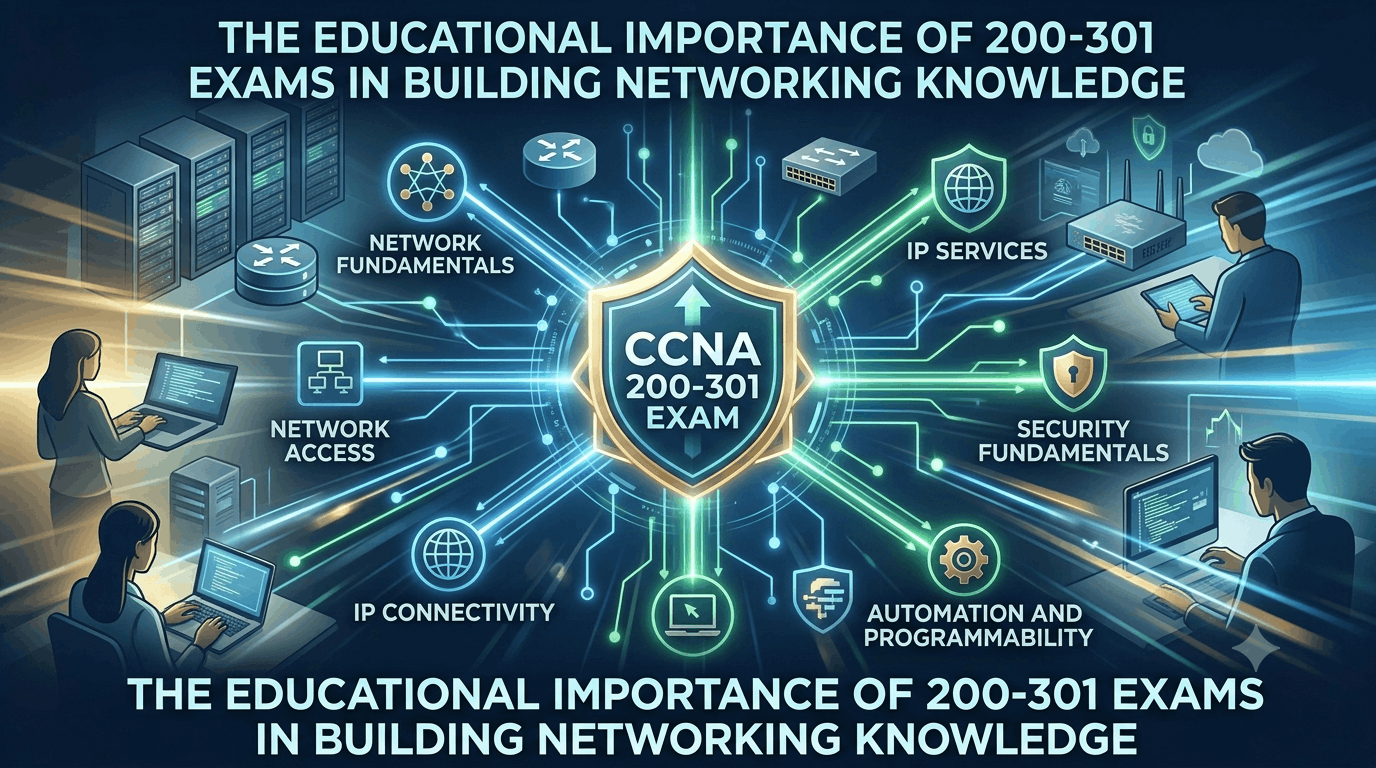
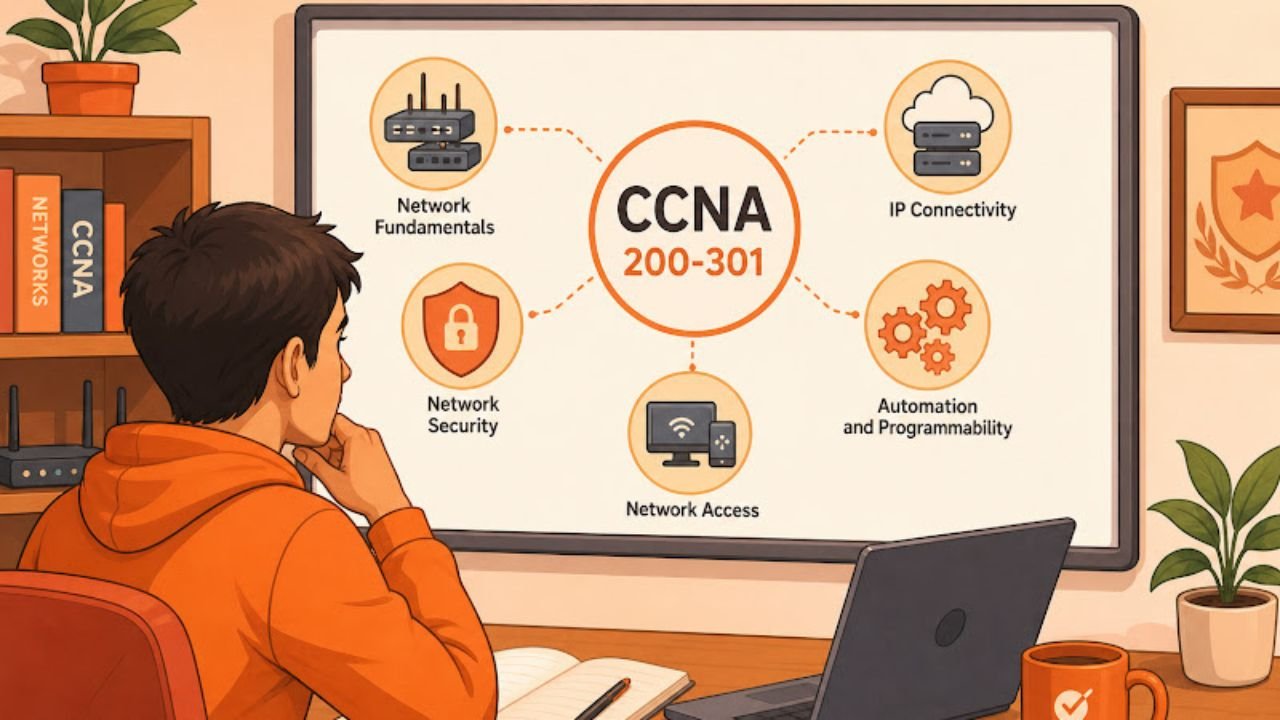
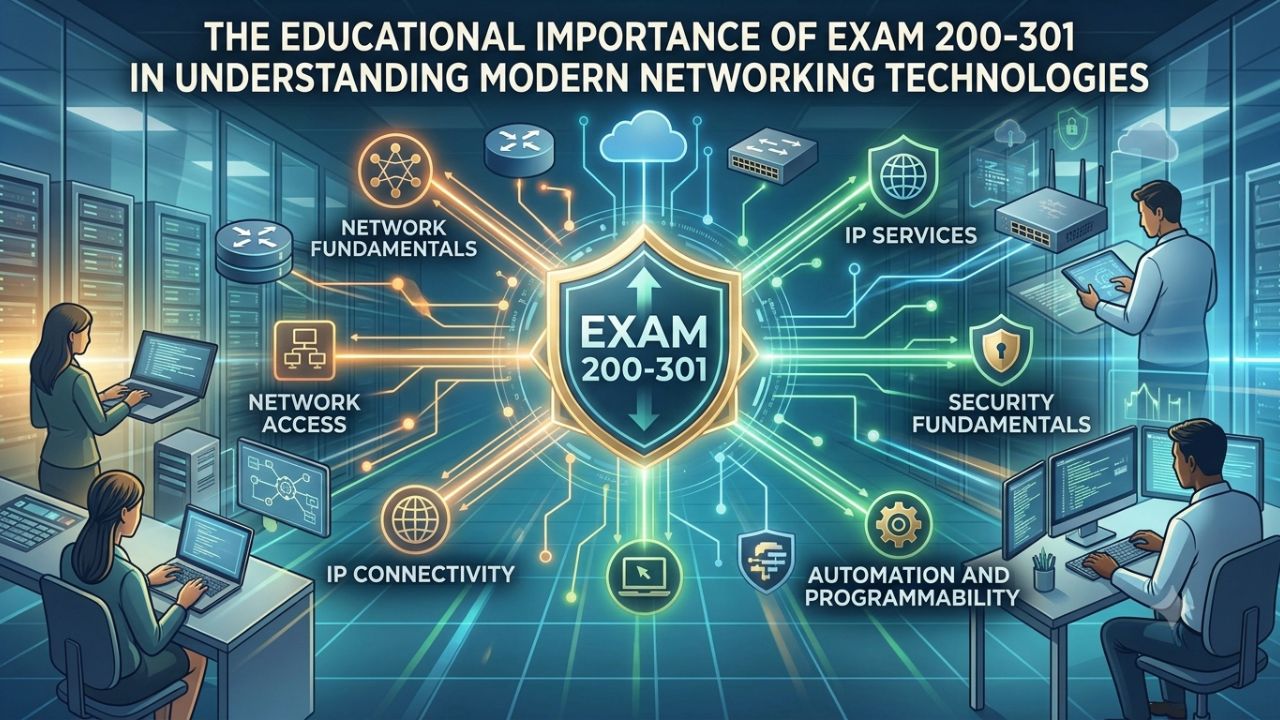
The educational concepts associated with the 200-301 certification focus on networking fundamentals, communication technologies, infrastructure, security awareness, and network operations. Rather than viewing these topics solely from the perspective of an examination, learners can appreciate them as building blocks that explain how modern digital systems communicate efficiently across local and global environments.
Studying networking concepts develops analytical thinking, technical awareness, and problem-solving abilities that remain valuable throughout a technology career.
Understanding Modern Computer Networks
A computer network is a collection of devices connected together for the purpose of sharing information and resources.
Modern networks allow organizations to:

- Exchange data
- Access cloud applications
- Support remote employees
- Connect mobile devices
- Improve collaboration
- Deliver online services
Without reliable networking technologies, today’s digital economy would not function effectively.
The Evolution of Networking Technology
Networking has changed dramatically over the past several decades.
Early computer networks were limited to local environments with relatively few connected devices. Today, global communication systems connect billions of computers, smartphones, servers, and smart devices through advanced networking technologies.
This evolution has enabled:
- Cloud computing
- Online education
- Video conferencing
- Digital healthcare
- Financial services
- Smart cities
Networking continues serving as the foundation of digital transformation.
Educational Topics Associated with 200-301
The educational subjects commonly related to 200-301 introduce learners to essential networking principles.
These include:
- Network architecture
- Communication protocols
- Routing concepts
- Switching technologies
- Wireless networking
- Network security
Together, these topics provide a comprehensive overview of how modern communication systems operate.
Network Devices and Their Roles
Every network depends on specialized devices that perform different communication tasks.
Common networking equipment includes:
- Routers
- Switches
- Firewalls
- Wireless access points
- Network controllers
- Modems
Understanding these devices helps learners recognize how information travels across interconnected systems.
Communication Protocols
Protocols establish standardized rules that allow computers and networking devices to communicate successfully.
Educational discussions introduce concepts such as:
- Data transmission
- Packet delivery
- Error detection
- Reliable communication
- Session management
Protocols ensure compatibility between different technologies and manufacturers.
Internet Protocol and Addressing
Internet Protocol (IP) provides the addressing system used by networked devices.
Important educational concepts include:
- IPv4
- IPv6
- Public addresses
- Private addresses
- Network segmentation
- Address management
These principles explain how devices identify one another and exchange information across networks.
Routing and Switching
Routing and switching represent two of the most important networking functions.
Routing determines the best path for information traveling between networks.
Switching enables efficient communication within local networks by directing traffic between connected devices.
These technologies improve:
- Communication speed
- Network efficiency
- Reliability
- Resource utilization
Understanding these concepts provides insight into enterprise networking operations.
Wireless Networking
Wireless communication has become an essential part of everyday life.
Educational topics often include:
- Wi-Fi technologies
- Wireless security
- Signal coverage
- Mobile connectivity
- Access point management
Wireless networking supports homes, businesses, educational institutions, and public environments.
Security Awareness
Protecting network infrastructure remains a priority for organizations around the world.
Educational security concepts include:
- Authentication
- Authorization
- Encryption
- Access control
- Threat prevention
- Network monitoring
These principles help reduce cybersecurity risks while supporting secure digital communication.
Automation and Modern Networking
Networking technologies continue evolving through automation.
Educational discussions introduce concepts such as:
- Automated configuration
- Network monitoring
- Infrastructure management
- Performance optimization
- Operational efficiency
Automation enables organizations to manage increasingly complex environments more effectively.
Cloud Computing and Networking
Cloud computing depends heavily on reliable networking infrastructure.
Educational cloud networking concepts include:
- Virtual networking
- Hybrid connectivity
- Resource scalability
- Cloud communication
- Secure remote access
Understanding these technologies demonstrates how networking supports modern cloud services.
The Importance of Continuous Learning
Technology changes rapidly, making ongoing education an essential part of professional growth.
Learners often strengthen their understanding through:
- Official documentation
- Academic publications
- Virtual laboratories
- Technical webinars
- Online educational courses
- Professional communities
Many learners also use educational prep questions to reinforce networking concepts, review terminology, and evaluate their understanding alongside official learning resources and hands-on practice. When used responsibly, these materials encourage knowledge retention rather than simple memorization.
Career Opportunities
Networking education supports many technology-related careers.
Examples include:
- Network Administrator
- Infrastructure Engineer
- Cloud Engineer
- Systems Administrator
- Technical Support Specialist
- Network Operations Analyst
- Cybersecurity Professional
- IT Consultant
As digital transformation continues worldwide, networking expertise remains highly valuable across numerous industries.
Building a Strong Technical Foundation
One of the greatest educational benefits of studying networking concepts is the strong foundation they provide for future learning.
Related technology disciplines include:
- Cybersecurity
- Cloud computing
- DevOps
- Systems engineering
- Enterprise networking
- Infrastructure management
Networking serves as a core subject that connects many specialized areas of information technology.
Networking in Everyday Life
Networking technologies influence countless daily activities.
Examples include:
- Streaming entertainment
- Online shopping
- Digital banking
- Remote learning
- Video meetings
- Smart home devices
Understanding these systems helps learners appreciate the technology that supports modern communication and digital services.
Frequently Asked Questions (FAQs)
What is 200-301?
The educational topics associated with 200-301 focus on networking fundamentals, including network architecture, routing, switching, wireless communication, security awareness, automation, and communication protocols.
Who can benefit from studying these concepts?
Students, educators, aspiring IT professionals, network administrators, business analysts, and technology enthusiasts can all benefit from networking education.
Why is networking knowledge important?
Networking enables communication between computers, cloud platforms, applications, and users while supporting nearly every modern digital service.
What educational subjects are commonly associated with networking?
Topics include IP addressing, routing, switching, wireless networking, security, communication protocols, cloud networking, and infrastructure management.
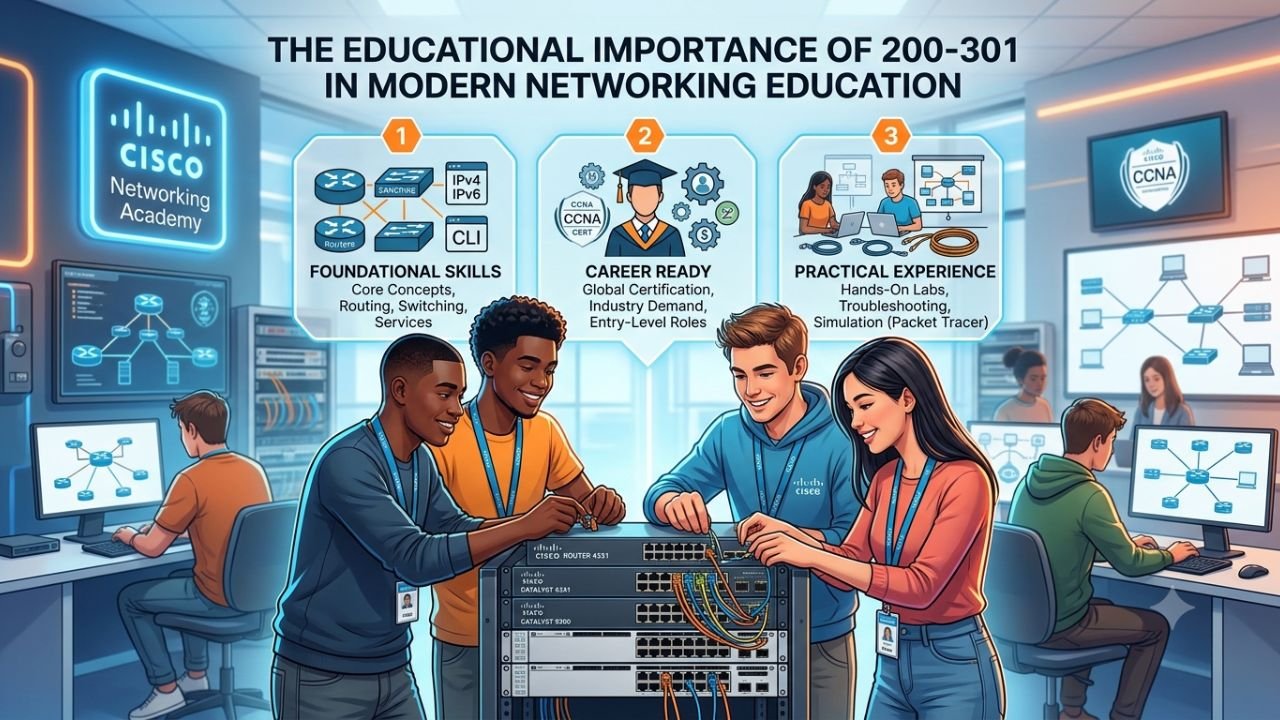
Is practical experience useful?
Yes. Laboratory exercises and simulated networking environments help learners apply theoretical concepts while strengthening analytical and troubleshooting skills.
Can networking education support future studies?
Absolutely. Networking provides an excellent educational foundation for advanced learning in cybersecurity, cloud computing, enterprise infrastructure, DevOps, and systems administration.
Conclusion
The educational concepts associated with 200-301 provide learners with valuable insight into the technologies that enable today’s connected world. By studying networking fundamentals, communication protocols, routing, switching, wireless networking, security, automation, and cloud infrastructure, individuals develop knowledge that supports both academic growth and professional development. As digital communication continues expanding across every industry, networking education remains one of the most important foundations in information technology. Through ethical learning, continuous education, and practical understanding, learners gain skills that remain relevant well beyond any certification and contribute to long-term success in the evolving technology landscape.