The Educational Importance of AI-900 Exams in Understanding Artificial Intelligence Fundamentals

Artificial intelligence has become one of the most influential technologies of the twenty-first century. From virtual assistants and recommendation systems to medical research and business automation, AI continues transforming the way people work, communicate, and solve complex problems. As organizations increasingly adopt intelligent technologies, understanding the basic principles of artificial intelligence has become valuable for students, business professionals, educators, and technology enthusiasts.
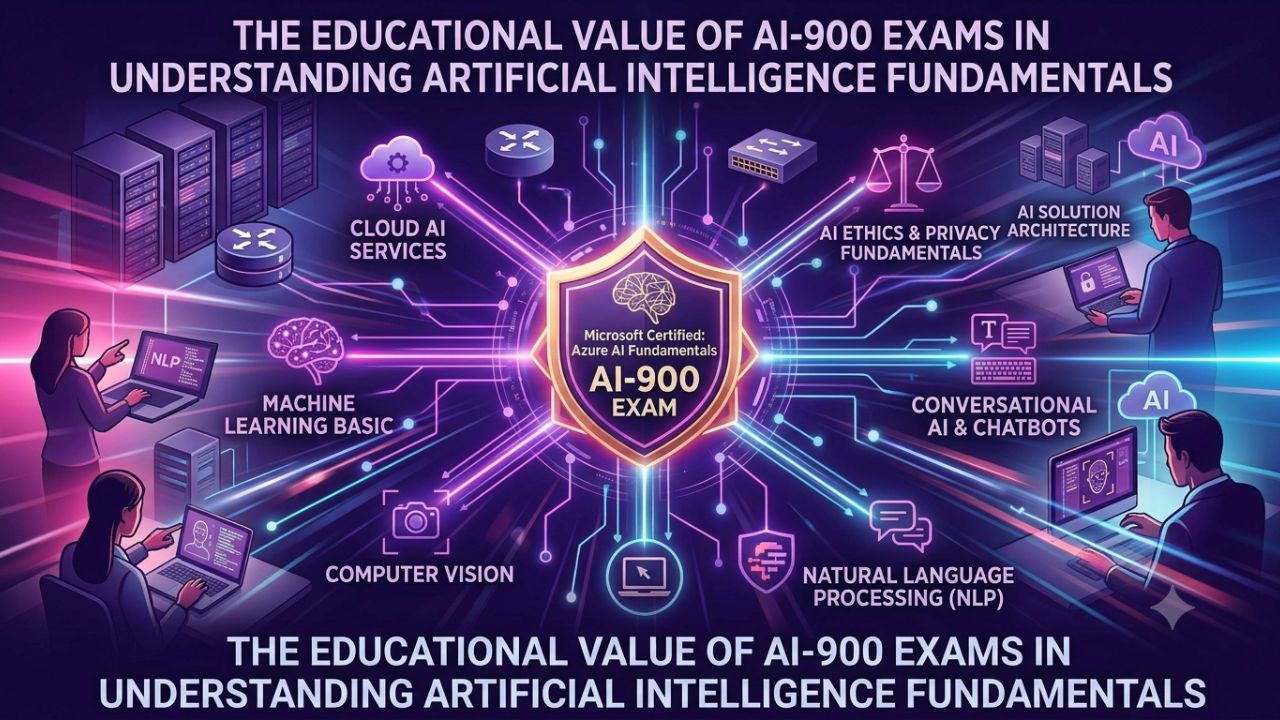
The AI-900 exam focuses on Microsoft Azure AI Fundamentals and introduces learners to the essential concepts behind artificial intelligence. Rather than emphasizing advanced programming or software engineering, the educational content associated with AI-900 explains the foundational ideas that support machine learning, computer vision, natural language processing, conversational AI, and responsible AI. These concepts help learners understand how intelligent systems function while providing a strong educational foundation for future studies in cloud computing and artificial intelligence.
Studying AI fundamentals encourages curiosity, supports digital literacy, and prepares learners to understand technologies that continue shaping industries around the world.
The Evolution of Artificial Intelligence
Artificial intelligence has progressed dramatically over the past several decades.
Early AI research focused primarily on theoretical problem-solving, while modern systems now assist millions of people every day through intelligent digital services.

Today, AI technologies support industries such as:
- Healthcare
- Education
- Finance
- Manufacturing
- Retail
- Transportation
- Agriculture
- Entertainment
The continued expansion of AI demonstrates its growing influence across both business and everyday life.
Understanding AI Fundamentals
The educational concepts associated with AI-900 introduce learners to the core principles of artificial intelligence without requiring advanced technical experience.
Common educational topics include:
- Machine learning
- Computer vision
- Natural language processing
- Conversational AI
- Responsible AI
- Azure AI services
Together, these subjects provide a broad understanding of modern intelligent technologies.
Machine Learning Concepts
Machine learning is one of the most recognized branches of artificial intelligence.
Instead of relying entirely on manually programmed instructions, machine learning systems identify patterns within data and generate predictions or recommendations.
Educational examples include:
- Product recommendations
- Fraud detection
- Sales forecasting
- Medical research
- Customer analytics
- Demand prediction
Learning these concepts helps explain how intelligent systems continuously improve through data analysis.
Computer Vision
Computer vision enables computers to interpret and analyze digital images.
Educational applications include:
- Image classification
- Facial recognition concepts
- Object detection
- Medical image analysis
- Optical character recognition
- Visual inspection systems
Computer vision continues supporting innovation across numerous industries.
Natural Language Processing
Natural Language Processing (NLP) allows computers to understand spoken and written human language.
Educational topics include:
- Language translation
- Speech recognition
- Sentiment analysis
- Text summarization
- Information extraction
- Intelligent search
NLP improves communication between people and digital systems.
Conversational Artificial Intelligence
Conversational AI focuses on creating systems capable of interacting naturally with users.
Examples include:
- Virtual assistants
- Customer service chatbots
- Voice-controlled applications
- Automated help desks
These technologies continue improving customer experiences and operational efficiency.
Responsible AI
Responsible AI represents one of the most important educational subjects associated with AI-900.
Organizations developing intelligent systems should consider principles such as:
- Fairness
- Transparency
- Accountability
- Privacy
- Reliability
- Security
Ethical AI development supports responsible innovation while protecting users and society.
Cloud Computing and Artificial Intelligence
Cloud computing has significantly expanded access to AI technologies.
Cloud-based AI services provide organizations with scalable computing resources that support intelligent applications without requiring extensive infrastructure investments.
Educational cloud concepts include:
- Resource scalability
- Data processing
- AI model deployment
- Global accessibility
- Cloud integration
Understanding this relationship explains how AI solutions are delivered worldwide.
Continuous Learning
Artificial intelligence evolves rapidly, making ongoing education increasingly valuable.
Many learners strengthen their understanding through:
- Official Microsoft documentation
- Educational books
- Online learning platforms
- Technical webinars
- Practice laboratories
- Professional communities
Students interested in expanding their educational understanding of AI concepts, responsible artificial intelligence, and Azure Fundamentals can explore additional learning materials by visiting this page here, along with official Microsoft educational resources and other trusted academic references.
Career Opportunities
Educational knowledge associated with AI fundamentals supports many professional roles.
Examples include:
- AI Specialist
- Cloud Engineer
- Data Analyst
- Technology Consultant
- Business Analyst
- Digital Transformation Professional
- IT Administrator
- Machine Learning Enthusiast
Although AI-900 focuses on foundational knowledge, it introduces learners to technologies that continue influencing future careers.
Building a Strong Educational Foundation
One of the greatest strengths of AI-900 is its ability to prepare learners for continued education.
Related technology fields include:
- Machine learning
- Data science
- Cloud computing
- Cybersecurity
- Data engineering
- Intelligent automation
Foundational knowledge makes advanced technical subjects easier to understand over time.
Artificial Intelligence in Everyday Life
Many people interact with AI without realizing it.
Examples include:
- Smart home devices
- Email spam filtering
- Online recommendations
- Navigation applications
- Digital assistants
- Image recognition tools
Understanding these everyday applications helps learners appreciate the practical value of artificial intelligence.
Frequently Asked Questions (FAQs)
What is the AI-900 exam?
The AI-900 exam introduces Microsoft Azure AI Fundamentals, including machine learning, computer vision, natural language processing, conversational AI, responsible AI, and cloud-based AI services.
Who can benefit from learning AI-900 concepts?
Students, educators, business professionals, IT staff, consultants, and anyone interested in artificial intelligence can benefit from studying these educational topics.
Is programming required for AI-900?
No. AI-900 focuses primarily on understanding artificial intelligence concepts rather than software development or advanced programming.
Why is responsible AI important?
Responsible AI promotes fairness, transparency, accountability, privacy, reliability, and ethical technology development.
What educational topics are commonly associated with AI-900?
Topics include machine learning, computer vision, conversational AI, natural language processing, Azure AI services, responsible AI, and cloud computing.
Can AI-900 support future education?
Yes. AI-900 provides an excellent educational foundation for advanced studies in artificial intelligence, cloud computing, data science, cybersecurity, and machine learning.
Conclusion
The educational concepts associated with AI-900 exams provide an excellent introduction to the rapidly expanding field of artificial intelligence. By exploring machine learning, computer vision, natural language processing, conversational AI, responsible AI, and cloud technologies, learners develop a deeper understanding of the intelligent systems that increasingly shape modern society. As organizations continue adopting AI across industries, building strong foundational knowledge supports lifelong learning, informed decision-making, and future educational opportunities. Focusing on ethical learning and genuine understanding ensures that the knowledge gained remains valuable far beyond any certification exam.