The Educational Importance of 220-1101 Exams in Building Foundational IT Knowledge
Information technology has become an essential part of nearly every aspect of modern life. Businesses, schools, healthcare organizations, financial institutions, and government agencies all rely on computers, networks, and digital systems to perform everyday operations. As technology continues to evolve, individuals entering the IT industry benefit from developing a strong understanding of computer hardware, operating systems, networking, mobile devices, and troubleshooting concepts.
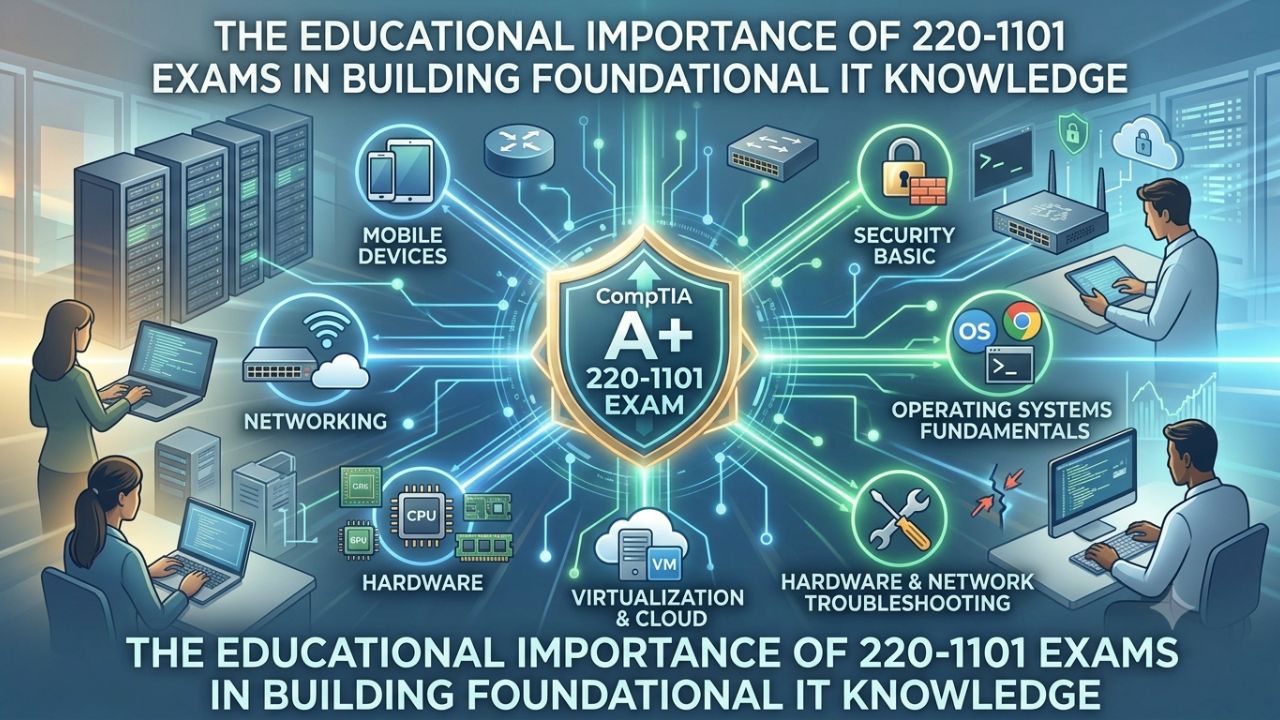
The 220-1101 exam is widely recognized as an educational assessment covering foundational IT topics. Rather than focusing on advanced specialization, the concepts associated with this exam introduce learners to the essential technologies that support modern computing environments. Studying these educational topics helps students understand how computers function, how devices communicate, and how technology professionals maintain reliable IT systems.
From an educational perspective, learning the subjects related to the 220-1101 exam provides valuable knowledge that supports continued learning in networking, cybersecurity, cloud computing, and technical support.
The Role of Information Technology
Information technology plays a critical role in supporting organizations of every size.
Modern IT systems enable:
- Digital communication
- Business operations
- Online education
- Healthcare services
- Financial transactions
- Cloud computing
Without reliable technology infrastructure, many of today’s digital services would not function effectively.
Understanding Computer Hardware
One of the primary educational topics associated with the 220-1101 exam is computer hardware.
Learners explore components such as:
- Processors (CPU)
- Memory (RAM)
- Storage devices
- Motherboards
- Power supplies
- Expansion cards
Understanding how these components work together helps explain the operation of modern computer systems.
Mobile Devices in Today’s Workplace
Mobile technology has transformed how people communicate and work.
Educational discussions often include devices such as:
- Smartphones
- Tablets
- Laptops
- Wearable technology
Learning about mobile hardware and connectivity helps learners appreciate the flexibility of modern computing environments.
Networking Fundamentals
Every connected device relies on networking technologies to exchange information.
Networking concepts commonly include:
- Local Area Networks (LAN)
- Wireless networking
- Internet connectivity
- IP addressing
- Routers
- Switches
These subjects provide the foundation for understanding digital communication.
Peripheral Devices
Computers often interact with additional hardware that improves functionality.
Examples include:
- Printers
- Scanners
- Monitors
- Keyboards
- Mice
- External storage devices
Understanding peripheral devices contributes to a broader knowledge of computer systems.
Cloud Computing Awareness
Cloud computing has become a major component of modern IT infrastructure.
Educational cloud concepts include:
- Online storage
- Cloud applications
- Virtual services
- Resource scalability
- Remote access
These technologies allow organizations to operate more efficiently while supporting flexible work environments.
Virtualization Concepts
Virtualization enables multiple computing environments to operate on shared physical hardware.
Educational benefits include understanding:
- Virtual machines
- Resource allocation
- Hardware optimization
- Infrastructure flexibility
Virtualization supports both educational laboratories and enterprise environments.
Troubleshooting Skills
Problem-solving represents one of the most valuable abilities in information technology.
Educational troubleshooting focuses on:
- Identifying problems
- Analyzing symptoms
- Testing possible solutions
- Verifying results
- Documenting findings
Developing logical troubleshooting skills strengthens critical thinking and technical confidence.
Cybersecurity Awareness
Security remains an important educational topic across all areas of information technology.
Fundamental security concepts include:
- Password protection
- Device security
- Malware awareness
- User authentication
- Safe browsing
- Data protection
These principles encourage responsible technology use while reducing security risks.
The Importance of Continuous Learning
Technology changes rapidly, making lifelong learning essential for IT professionals.
Learners often continue their education through:
- Official vendor documentation
- Technical books
- Virtual labs
- Educational videos
- Professional communities
- Classroom instruction
Some learners also explore educational resources from recognized training providers such as Test-King alongside official documentation and practical learning environments to reinforce foundational IT concepts in an ethical and responsible manner.
Communication and Customer Service
Technology professionals often work directly with users who need technical assistance.
Educational topics extend beyond technical knowledge to include:
- Professional communication
- Active listening
- Documentation
- Customer support
- Team collaboration
These workplace skills contribute to effective technical support and stronger professional relationships.
Career Opportunities
The educational knowledge associated with the 220-1101 exam supports many entry-level and developing IT careers.
Examples include:
- IT Support Specialist
- Help Desk Technician
- Technical Support Representative
- Desktop Support Technician
- Field Service Technician
- Systems Support Assistant
- Junior Network Technician
- Computer Repair Technician
A strong understanding of foundational IT concepts creates opportunities for continued specialization in other technology fields.
Building a Strong Technical Foundation
One of the greatest educational benefits of studying the topics associated with the 220-1101 exam is the strong technical foundation they provide.
Related educational fields include:
- Networking
- Cloud computing
- Cybersecurity
- Systems administration
- Virtualization
- Infrastructure management
Mastering the basics makes advanced technology concepts easier to understand in future studies.
Technology in Everyday Life
Most people interact with computer technology throughout the day without recognizing the complexity behind these systems.
Examples include:
- Online banking
- Video conferencing
- Digital classrooms
- E-commerce platforms
- Mobile applications
- Streaming services
Understanding IT fundamentals helps learners appreciate how these technologies work together to support daily activities.
Frequently Asked Questions (FAQs)
What is the 220-1101 exam?
The 220-1101 exam focuses on foundational information technology concepts, including computer hardware, networking, mobile devices, cloud computing, virtualization, peripherals, and troubleshooting.
Who can benefit from studying these topics?
Students, aspiring IT professionals, educators, technical support staff, and anyone interested in learning about information technology can benefit from these educational concepts.
Why are IT fundamentals important?
Foundational IT knowledge helps learners understand how computers, networks, operating systems, and digital infrastructure function in modern organizations.
What educational subjects are commonly associated with the 220-1101 exam?
Common topics include hardware, networking, mobile devices, virtualization, cloud computing, troubleshooting, security awareness, and peripheral devices.
Is practical experience valuable?
Yes. Hands-on practice helps learners apply theoretical knowledge while improving troubleshooting abilities and technical confidence.
Can learning 220-1101 concepts support future education?
Absolutely. Foundational IT knowledge provides an excellent starting point for advanced learning in cybersecurity, networking, cloud computing, systems administration, and other specialized technology disciplines.
Conclusion
The educational concepts associated with the 220-1101 exam provide an excellent introduction to the world of information technology. By exploring computer hardware, networking, mobile devices, cloud computing, troubleshooting, and cybersecurity awareness, learners develop a comprehensive understanding of the technologies that support modern digital environments. As organizations continue relying on technology for everyday operations, foundational IT knowledge remains an essential building block for lifelong learning and professional growth. Focusing on genuine understanding, ethical study practices, and continuous education ensures that learners acquire practical knowledge that extends far beyond any certification examination.