An ETF, or Exchange-Traded Fund, is a basket of securities. Typically, an ETF tracks an index, such as the Nifty or the Sensex. Some popular ETFs in the country include Nifty 50 ETFs, Gold ETFs, Liquid ETFs, and International ETFs. Learn what ETFs are, their different types, benefits, risks, and who should invest in them.
The popularity of ETFs in the stock market is growing rapidly. They allow investors to invest in multiple companies without having to select individual stocks. Unlike mutual funds, ETFs are traded on stock exchanges just like regular shares. ETF units are listed on the stock exchange, and an investor can begin by purchasing as little as a single unit.
What is an ETF?
Exchange Traded Funds (ETFs) are funds that track indices such as the Sensex, Nifty, etc. ETFs differ from mutual funds because they are listed on stock exchanges; therefore, you can buy or sell them just like shares. Through an ETF, one can invest in a variety of stocks, bonds, or other assets, and it is traded on a stock exchange in the same way as shares.
ETFs are becoming increasingly popular among stock market investors. They have emerged as a viable option, especially for those who wish to invest in the stock market but prefer to avoid the high risk associated with investing in the shares of a single company.
Example: If you buy a Nifty 50 ETF, you are indirectly investing in 50 large companies.
Types of ETFs
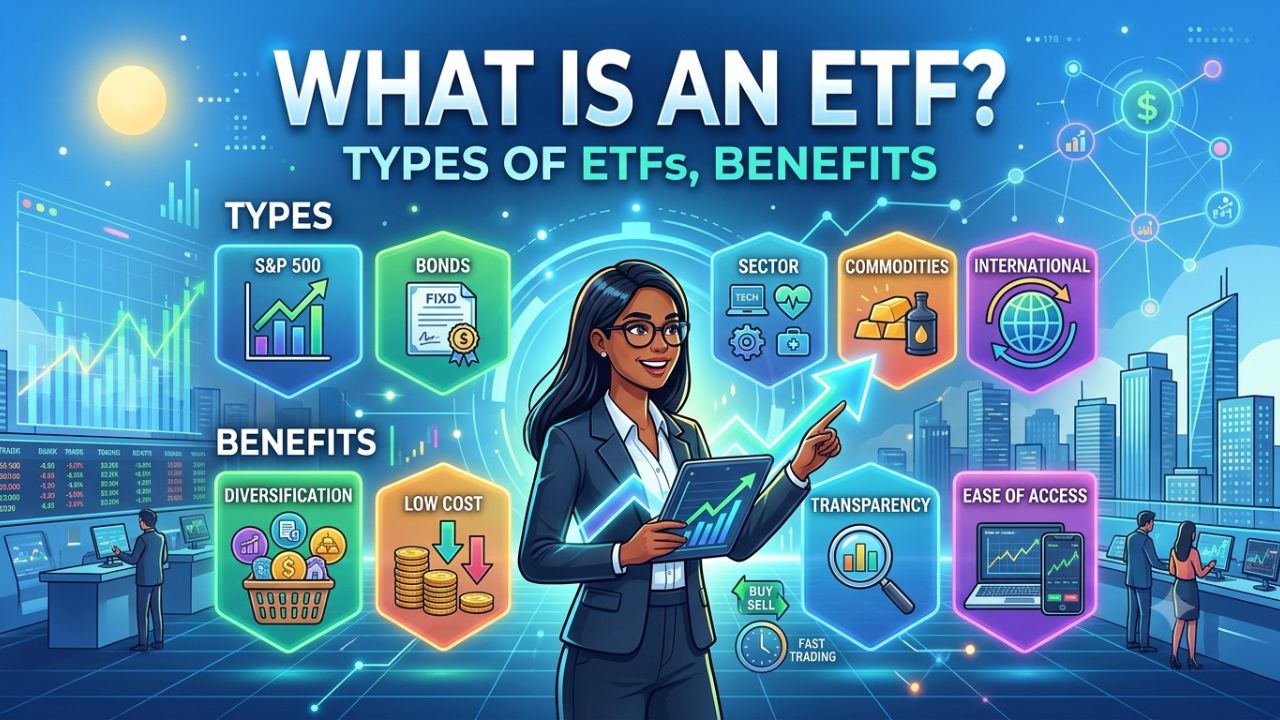
ETFs are primarily classified based on the assets they invest in. Equity, gold, debt, index, and currency are the most common types of ETFs.




1. Equity ETF
Equity ETFs are primarily used to invest in stocks. They are based on a stock market index, a basket of stocks, or a specific equity strategy. Through equity ETFs, investors can invest in multiple companies simultaneously without having to purchase shares of each company individually.
2. Index ETF
Index ETFs track the performance of a specific market index. In India, ETFs based on the Nifty 50 and BSE Sensex are prominent examples of this.
3. Gold ETF
Gold ETFs are funds linked to the price of gold. Instead of purchasing physical gold, coins, or gold bars, investors can buy Gold ETFs. Investors can trade (buy and sell) units of these ETFs on an exchange. Given the current market fluctuations, many people are choosing to invest in Gold ETFs.
4. Silver ETF
Silver ETFs are primarily linked to the price of silver. The price of silver depends on factors such as industrial demand, as well as demand from the solar energy and electronics sectors. Given this, one may consider investing in Silver ETFs.
Benefits of Investing in ETFs
Investing in an ETF (Exchange Traded Fund) is a good option for investors who want to build a diversified portfolio at a low cost. ETFs track an index, commodity, sector, or other asset, allowing investors to invest in a collection of various securities rather than just a single one.
Diversification
ETFs hold multiple securities within a single fund. Only a single transaction is needed for this kind of investment.
Low cost structure
Most ETFs follow a passive strategy by tracking an index. This helps you improve the returns over the long term.
High liquidity
ETF units are traded on stock exchanges throughout market hours. You can buy and sell ETFs anytime during market time. As a result, you retain greater control compared to mutual funds.
Transparency
Investors can easily see which assets an ETF is investing in. This makes investing easier and ensures complete transparency. This goes a long way in building trust and clarity.
FAQs
What is an ETF?
An ETF is a fund that tracks an index or assets. It can be traded on the stock exchange.
Is ETF investment suitable for long-term goals?
Yes. ETFs are widely used for long-term investing.
Can you invest in ETFs via SIP?
ETFs do not offer a traditional SIP facility; however, investors can create an SIP-like investment by purchasing ETF units at regular intervals.
What is required to start investing in ETFs?
To invest in ETFs, you must have a Demat account and a trading account.
Conclusion
In this blog, we have discussed what is ETF, types and how it works. ETFs provide a structured way to participate in different market segments.
Disclaimer: The information contained in this Article (“Article”) is for general informational purposes only. Minidea.co.in does not make any warranties about the completeness, reliability, and accuracy of this information.